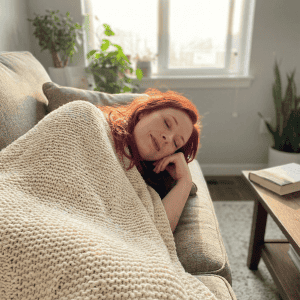
If the thought of “New Year, New Me” makes you want to crawl back under the covers, you aren’t alone. (I’m notoriously horrible at setting goals…)
For years, we’ve been sold a version of self-improvement that looks a lot like punishment: 5 AM alarms, grueling workout regimens, and productivity hacks designed to squeeze every ounce of efficiency out of our days. We start January with a sprint, running on pure adrenaline and shame, only to burn out by February.
But things are shifting in 2026. The collective exhaustion with “hustle culture” is reaching a tipping point where we’re not longer interested in resolutions that require that we become different people. Instead, we’re looking for resolutions that help us come home to who we already are.
This year, it’s time to challenge the culture of the hustle-based resolution and replace it with something radical: sustainable, gentle consistency.
The Problem with "Hustle-based" Resolutions
Traditional resolutions fail because they rely on intensity and willpower rather than gentle consistency. They assume that the version of you who exists on January 1st has an infinite supply of willpower.
But willpower is a finite resource. When life gets busy, when the emails pile up, the kids get sick, or the seasonal gloom sets in, the high-effort habits are the first things to go. And when they end, the shame spiral starts. We tell ourselves we failed (again), so we stop trying altogether.
Hustle culture tells us that if it doesn’t hurt, it doesn’t count. Spiritual sustainability tells us the opposite: If it doesn’t fit into your real life, it won’t last, so let it go.
3 Ways to "Resolution-Proof" Your New Year
Before you commit to a new routine and a “new you,” here are three things that can help ensure your goals support your well-being rather than draining it.
1. Set “Feeling” Goals, Not Just “Doing” Goals
Hustle resolutions focus on metrics: “Lose 10 pounds,” “Read 50 books,” “Meditate for 30 minutes daily.” When you miss the metric, you feel like a failure. Instead, try setting intentions based on how you want to feel.
Instead of: “I will do yoga for an hour every day.”
Try: “I want to feel more connected to my body.”
This allows for flexibility. On a high-energy day, that might mean batch creating content. On a low-energy day, it might mean giving yourself grace to do something nourishing (for me, that’s reading a fantasy novel) and recharge before doing one work-focused activity that feels gentle or easy. Both count because both honor the feeling you’re chasing.
2. The “Minimum Viable Habit”
When we are motivated, we tend to plan for our best days. But consistency is built on our worst days. Ask yourself: What is the “stupid-simple” version of this habit? If your goal is journaling, the “hustle” version is three pages a day. The “minimum viable” version is one sentence. On your hardest days, commit only to the minimum. It keeps the momentum alive without the pressure, proving to yourself that you can show up even when life is chaotic.
3. Curate Your Inputs
Burnout often comes from information overload. It’s hard to build a spiritual practice when your brain’s constantly flooded with high-stress (sensationalized for the highest shock value) news, work emails, and comparison-inducing social media scroll holes. Protect your peace by curating what enters your mind. This might mean turning off notifications, unsubscribing from newsletters that make you feel “less than” (or just make you exhausted thinking about opening them), or finding tools that deliver peace to you directly, bypassing the noise of the internet.
A Simpler Way to Build a Sustainable Practice
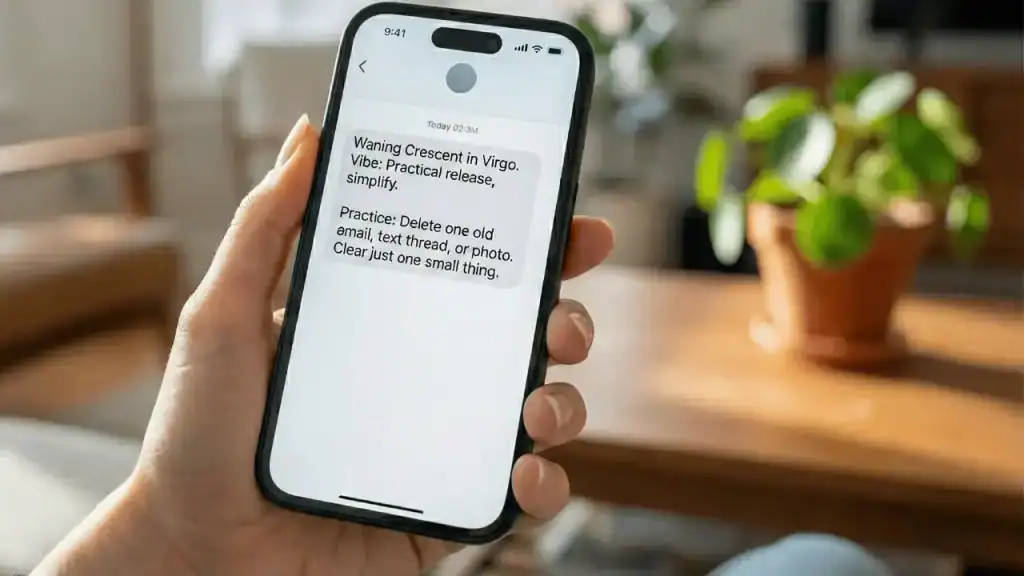
This need for curated, low-friction peace is exactly why we’re launching the Luna SMS Subscription (coming Jan. 19th – we practice what we preach). We wanted to create a tool that supports the “Minimum Viable Habit” approach to spirituality.
Apps can be great, but they often become just another “to-do” list item. They require you to unlock your phone, navigate past distractions (Instagram, email, news), and log in. By the time you get to the app, you might have already forgotten why you’re there.
Luna SMS is different. It comes to you.
Here is why Luna SMS works for a more sustainable 2026:
1. It’s Low-Friction Mindfulness
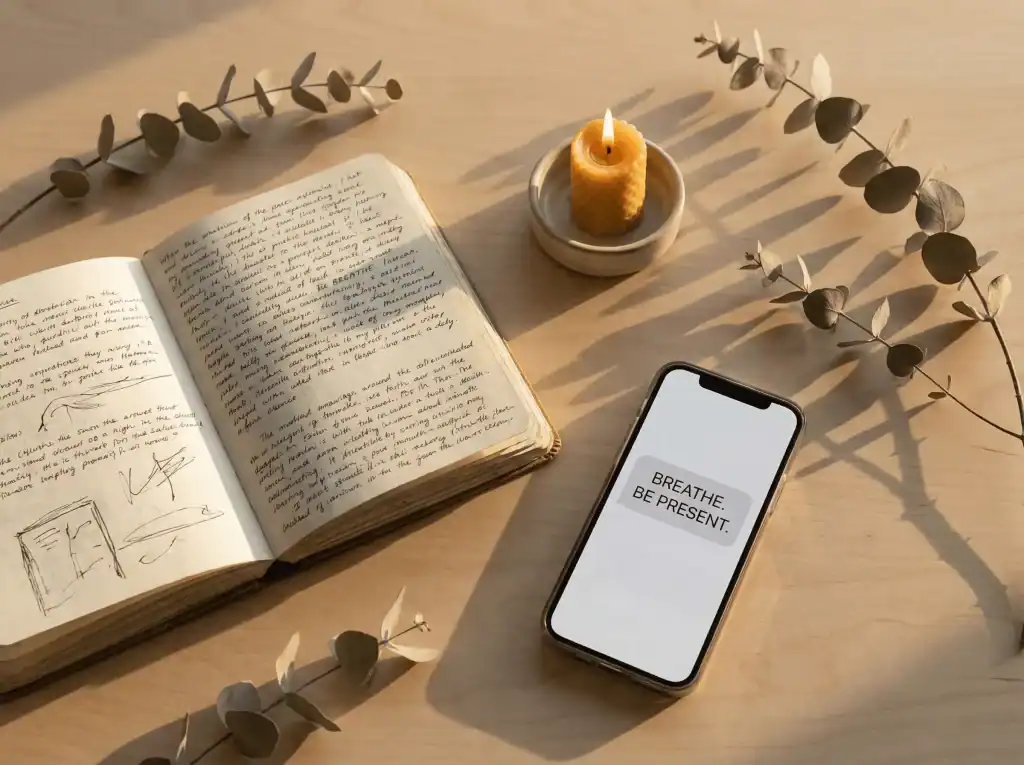
There is no app to open, no login to remember, and no interface to learn. A text message is the most native, intimate way we communicate. When a Luna SMS message arrives, it feels like a note from a wise friend, gently nudging you back to center right when you need it.
2. Consistency Over Intensity
Luna SMS doesn’t ask for an hour of your time. It offers bite-sized wisdom. A lunar insight and a tiny quick 30-60 second practice that aligns with the lunar energy of the day. It is the ultimate “Minimum Viable Habit,” allowing you to stay spiritually connected without adding another heavy task to your plate.
3. Aligned with Natural Rhythms
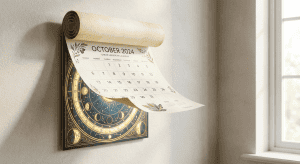
Hustle culture operates on a 24-hour, linear clock that expects the same output every day. Luna SMS operates on cycle time. By aligning our messages with the moon’s phases, we remind you that you are nature. There are times to push (Waxing Moon) and times to rest (Waning Moon). Luna SMS gives you permission to ebb and flow, making your practice sustainable for the long haul.
Your Invitation for 2026
This New Year, you don’t need a gym membership for your soul. You don’t need to commit to reading 50 spiritual texts or meditating for an hour a day.
You just need to stay connected.
Let’s leave the hustle in 2025. In 2026, let’s choose a spiritual practice that meets us where we are. One text message at a time.